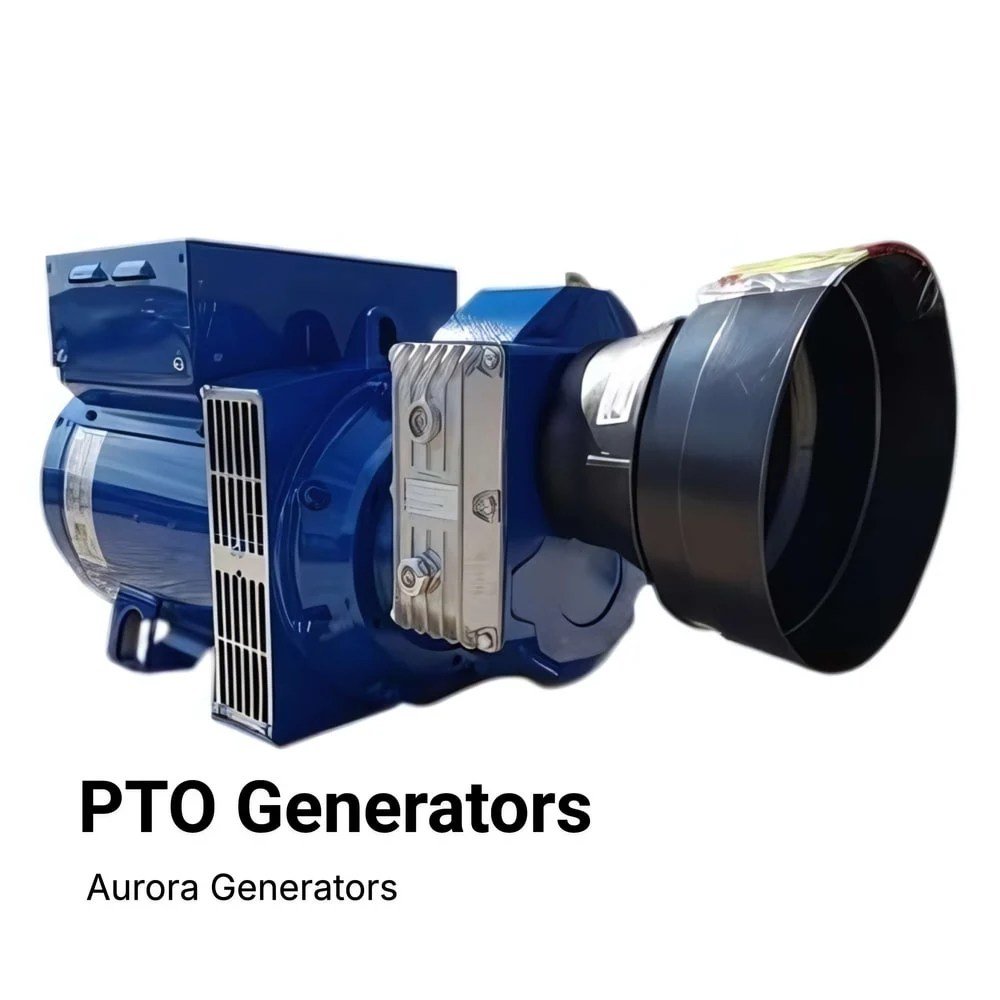
Farming is a dance with the elements, and nowhere is that more evident than in the persistent need for reliable power. Whether you're miles from the grid, facing an unexpected outage, or powering specialized equipment, the question of "how will I get power?" looms large. For many operations, the answer lies in Comparing PTO Generators to Other Power Sources for Farm Needs, and it's a conversation worth having.
Unlike a standard generator that carries its own engine, a Power Take-Off (PTO) generator harnesses the brute force of your existing tractor. It's a clever, often overlooked solution that transforms your tractor into a mobile, versatile power plant. But is it the right power source for your farm? Let's dig in.
At a Glance: PTO Generators for Farm Power
- Tractor-Powered: Uses your tractor's engine via the PTO shaft, eliminating the need for a separate engine or its maintenance.
- Cost-Effective: Often cheaper upfront than self-contained generators of similar output.
- Highly Reliable: Leveraging a well-maintained tractor means a dependable power source.
- Portable & Flexible: Easily moved to wherever power is needed, from the barn to the farthest field.
- Low Maintenance: Fewer moving parts than a traditional generator; mainly consists of an alternator and gearbox.
- Power Output Varies: From small 6-volt charging units for vintage tractors to massive 85,000-watt giants powering entire operations.
- Clean Power Available: Many modern PTO generators offer low harmonic distortion, safe for sensitive electronics.
Unlocking Your Tractor's Hidden Power: What is a PTO Generator?
Imagine your trusty tractor, not just pulling plows or balers, but quietly humming as it powers your entire dairy operation during an outage, or brings electricity to a remote irrigation pump. That's the magic of a PTO generator.
At its heart, a PTO generator is an alternator coupled with a gearbox, designed to attach directly to your tractor's power take-off (PTO) shaft. This shaft is engineered to transfer mechanical power from the tractor's engine to other appliances. Instead of providing power to a mower or a spreader, it spins the generator's alternator, producing electricity. It's a remarkably efficient way to utilize an asset you already own and maintain.
Most tractors offer PTO shaft speeds of either 540 RPM (revolutions per minute), which is about 9 times per second, or 1000 RPM (around 16.6 times per second). The generator's internal gearing then steps this speed up to the appropriate RPM for electricity generation, typically 1800 or 3600 RPM for 60Hz power. This elegant design means you're not buying or maintaining a separate engine just for power generation; your tractor fills that role perfectly.
The PTO Advantage: Why Farmers Are Turning to Tractor Power
For agricultural operations, the appeal of a PTO generator isn't just about novelty; it's about practical, economic, and operational benefits that align perfectly with farm life.
Leveraging Existing Assets
One of the most compelling reasons to choose a PTO generator is that you're using machinery you already own and regularly maintain. Your tractor's engine is built for heavy-duty, continuous work, making it an excellent power source. This means no extra engine to service, no separate oil changes, no additional fuel system to worry about – just plug into your tractor and go.
Unmatched Reliability and Durability
Farm equipment is designed to be tough, and PTO generators are no exception. They often feature robust constructions, like cast iron gearcases and helical gears, built to withstand the rigors of farm environments. Because the generator itself doesn't have an engine, there are fewer complex components to break down. This translates to exceptional reliability and a long operational lifespan, often outlasting traditional self-contained generators. When you're dealing with critical power needs, like milking parlors or ventilation systems, that reliability is priceless.
Cost-Effectiveness: A Smart Investment
Generally, the upfront cost of a PTO generator is lower than a comparable self-contained standby or portable generator with its own engine. You're effectively buying the alternator and gearbox, not an entire additional engine assembly. Over time, the maintenance savings compound, as you're only maintaining your tractor. This makes PTO generators a highly attractive financial choice for many farm operations.
Mobility and Versatility
Need power at the far end of a field for temporary fencing or a well pump? Just hook up your PTO generator to the three-point hitch or a trailer, drive your tractor there, and you're in business. This incredible portability makes them ideal for a wide range of tasks beyond just emergency standby power, offering true flexibility across your entire property.
Cleaner Power for Modern Farms
Today's farms increasingly rely on sensitive electronics, from milking robotics to precise environmental controls. Many modern PTO generators are designed to deliver "clean power" with low harmonic distortion. This means the electricity they produce is stable and consistent, protecting your valuable and delicate equipment from power fluctuations that can cause damage or malfunction. Features like premium Square D circuit breakers and precise voltage regulation ensure your power is not just abundant, but also safe.
PTO vs. Standalone Generators: A Head-to-Head for Farm Needs
To truly appreciate the PTO generator, it's helpful to compare it directly with its most common alternatives: standalone generators. These come in two main types: portable and standby.
Standalone Generators: The Self-Contained Solution
Standalone generators are exactly what they sound like: self-contained units with their own engine (gasoline, diesel, or propane), fuel tank, and alternator. They are designed to operate independently.
Portable Generators
These are typically smaller, wheel-mounted units often used for recreational purposes, construction sites, or powering a few essential appliances during a short outage.
- Pros: Highly portable for smaller loads, relatively inexpensive for low wattage, easy to start up manually.
- Cons: Limited power output for whole-farm needs, require frequent refueling, generally louder, and less durable for continuous heavy use.
Standby Generators
These are large, permanently installed units, often connected directly to your electrical panel via an automatic transfer switch. They are designed to kick on automatically when grid power fails.
- Pros: Fully automatic operation, seamless transition during outages, often run on natural gas or large diesel tanks for extended operation, high power output available.
- Cons: Very high upfront cost (generator + installation), still require dedicated engine maintenance (oil, filters, spark plugs, etc.), significant fuel storage requirements, not portable for remote field work, often require professional installation and periodic testing.
Where PTO Generators Fit In
When you weigh these against a PTO generator, the differences become clear.
PTO Generator Strengths (vs. Standalone):
- No Redundant Engine: You already own and maintain your tractor's engine.
- Lower Upfront Cost: You're paying for the generator head, not a whole engine and chassis.
- Greater Portability for High Power: Unlike heavy standby units, a high-wattage PTO generator can be moved anywhere your tractor can go.
- Simpler Maintenance: Focus your maintenance efforts on one engine (your tractor's).
- Exceptional Durability: Built for heavy farm use, often outlasting lighter-duty portable units.
- Flexibility: Easily switched between emergency power and remote work power.
PTO Generator Considerations (vs. Standalone): - Tractor Dependency: You must have a tractor available and running. If your tractor is down, so is your power source.
- Manual Setup: For standby power, it requires manually connecting to the tractor and transfer switch, which takes time. It's not an automatic switch-on like a dedicated standby unit.
- Sizing is Key: You need a tractor with sufficient horsepower (HP) to drive the generator effectively.
- Fuel Source: You'll be burning tractor fuel (diesel or gasoline, depending on your tractor).
Ultimately, the choice hinges on your specific needs. For automatic, hands-off standby power, a dedicated standby generator might be preferable. But for robust, versatile, cost-effective power that leverages existing farm assets, the PTO generator often emerges as the clear winner.
When a PTO Generator Becomes Your Farm's Best Friend: Ideal Applications
PTO generators aren't just an alternative; they are often the superior choice for specific farm scenarios.
Uninterrupted Standby Power for Critical Systems
When the grid goes down, farm operations can't stop. Milking machines, ventilation in livestock barns, refrigeration for produce, and even residential power for the farmhouse are non-negotiable. A PTO generator provides the robust, reliable backup power needed to keep these essential systems running smoothly. Models like the Winco 75,000 Starting/Running Watts PTO Generator or the 85,000 Watt PTO Generator can easily handle the demands of a large farm, often providing enough power for multiple buildings or even an entire farmstead. Their ability to deliver clean power (low harmonic content) is also crucial for protecting sensitive electronic controls in modern farm equipment.
Powering Remote Field Operations
Imagine needing power for an electric fence energizer deep in a pasture, running a well pump for irrigation far from any power lines, or powering electric tools for on-site repairs in the back forty. Dragging extension cords is impractical, and small portable generators might lack the punch or durability. This is where the PTO generator truly shines. Simply drive your tractor, with the generator attached via a three-point hitch or trailer, to the work site. You're bringing serious power directly to the point of need, making jobs more efficient and accessible.
Mobile Workshops and Construction Projects
For any temporary construction, repair work, or even setting up a mobile workshop on the farm, a PTO generator offers unparalleled flexibility. Power welders, air compressors, saws, and other heavy-duty tools without worrying about circuit limits or finding an outlet. The Winco 10,000 Watt Generator, for instance, provides substantial power in a more compact form, perfect for these kinds of intermittent yet demanding tasks.
Temporary Events and Seasonal Demands
Hosting a farm market, a community event, or needing extra power for seasonal tasks like grain drying or processing? A PTO generator can step in to provide the necessary electricity without a permanent installation. Its ability to move and set up quickly makes it a valuable asset for non-routine power requirements.
Sizing Up Your Power Needs: How Many Watts Do You Really Need?
Choosing the right PTO generator starts with a clear understanding of your power demands. Undersize, and you'll constantly trip breakers; oversize, and you've spent more than you needed.
The average house typically needs between 5,000 and 8,000 running watts to power essential appliances during an outage. However, farm needs are often far greater and more complex. You'll need to account for two types of wattage:
- Running Watts (Continuous Watts): The power an appliance needs to operate steadily.
- Starting Watts (Surge Watts): The brief burst of extra power an appliance, especially one with an electric motor, needs to start up. This can be 2-3 times its running wattage.
Here's a simplified approach to calculate your farm's needs: - List all essential appliances and equipment: Include everything you absolutely need to run during an outage or at your remote site (milking machines, lights, refrigerators, well pumps, heaters, fans, shop tools, etc.).
- Find their running and starting watts: This information is usually on the appliance's data plate or in its manual.
- Identify the highest starting wattage: This is your "surge" requirement.
- Add up all running watts of items you expect to run simultaneously: This is your "continuous" requirement.
- Your generator's running watts must meet your continuous requirement.
- Your generator's starting watts must meet your highest single starting wattage + the running watts of all other simultaneously running items.
Example:
If your well pump needs 3,000 running watts but 9,000 starting watts, and you also need to run a refrigerator (800 running, 2,200 starting) and lights (500 running), your calculation would look something like this:
- Continuous Total: 3000 (pump) + 800 (fridge) + 500 (lights) = 4,300 running watts.
- Surge Total (assuming pump starts while others run): 9,000 (pump start) + 800 (fridge) + 500 (lights) = 10,300 starting watts.
In this scenario, you'd need a generator that can provide at least 4,300 continuous watts and handle a peak surge of 10,300 watts. This quick calculation helps you focus on generators that can truly deliver.
The Critical Connection: Matching Your PTO Generator to Tractor HP
The horsepower (HP) of your tractor isn't just for pulling heavy loads; it's also the engine behind your PTO generator. A mismatch here means your generator won't produce its rated output, or worse, you could damage your tractor.
A good rule of thumb is that for every 10 kilowatts (KW) of generator output, you'll need approximately 20 horsepower at the PTO shaft. Since 1 KW equals 1,000 watts, a 50,000-watt (50 KW) generator would typically require at least 100 HP.
Let's look at some examples from the market:
- Winco Large RFB Tractor-Powered Generator (50,000 running watts / 50 KW): This robust unit requires a 100 HP tractor. It's designed for a 1000 RPM PTO shaft, offering serious power for demanding farm applications. Whether fixed to a three-point hitch or mounted on a trailer for mobility, it provides clean power with a built-in voltmeter.
- Winco 75,000 Starting/Running Watts PTO Generator (75 KW): Stepping up the power, this model needs a 150 HP tractor. It boasts 8% lower harmonic content for exceptionally clean energy, making it suitable for even the most sensitive farm electronics. At 730 pounds and measuring 37.5 x 23 x 20 inches, it typically requires a trailer for transport, offering a mainline circuit breaker and a full power Anderson style receptacle. This kind of output makes high-capacity PTO generators ideal for entire farmsteads.
- Winco 85,000 Watt PTO Generator (85 KW): For the largest demands, this generator requires a substantial 170 HP tractor. Delivering 85KW continuous power at 1800 RPM (generator speed), it's a single-phase unit outputting 120-240 volts. Weighing 1100 pounds, it features 4-wire Anderson power receptacles, 20 Amp and 50 Amp plugs, and a large frequency meter for precise power monitoring.
Even for smaller options, like the Winco 10,000 Watt Generator, you'll still need a tractor capable of providing sufficient power for its 515 RPM operating speed and 10KW output. This model is notable for its low harmonic distortion, cast iron gearcase, premium Square D circuit breakers, and protective PTO shield – all indicators of a high-quality, durable unit that is load tested before leaving the factory.
Always check the manufacturer's specifications for both the generator's HP requirement and your tractor's PTO HP output to ensure a safe and effective match.
Exploring PTO Generator Models: A Spectrum of Power for Every Farm
The world of PTO generators isn't a one-size-fits-all affair. From charging a vintage tractor battery to powering a sprawling farm, there's a PTO solution tailored to various needs.
Heavy-Duty Workhorses: Powering the Modern Farm
For farms with substantial power requirements, especially for critical standby power or large-scale remote operations, models from brands like Winco lead the charge. We've already touched on the impressive capabilities of the Winco Large RFB (50KW), the 75,000-watt, and the 85,000-watt models, which are designed to power almost anything a farm can throw at them. These are typically three-point hitch or trailer-mounted units, built for continuous, high-output performance and feature sophisticated controls like large voltmeters and frequency meters to ensure stable power. They truly showcase Winco's range of PTO generators as top-tier solutions.
Mid-Range & Versatile: The Everyday Workhorse
Not every farm needs 85,000 watts. For general-purpose backup, smaller workshops, or powering specific remote equipment, options like the Winco 10,000 Watt Generator hit a sweet spot. This compact yet powerful unit offers 10,000 watts, maintains low harmonic distortion for sensitive electronics, and features a robust cast iron gearcase. Its operating speed of 515 RPM makes it suitable for a wider range of tractors, providing excellent versatility without overspending on capacity.
Specialty & Vintage Tractor Power: Keeping History Alive and Working
The concept of using a tractor's power for generation isn't new. For vintage tractor enthusiasts or those with specific low-voltage needs, there's a specialized category of generators designed to work with older models, often replacing original components.
- DB Electrical GFD0002 Generator: This smaller, 6-volt generator is a perfect example, designed specifically for classic Ford tractor models 2N, 8N, and 9N. It's a positive ground generator with a clockwise rotation, 12 amps, an external fan, and regulator. Measuring a compact 8.4 x 7.9 x 4.6 inches and weighing just 16.7 pounds, it meets OEM specifications and is ideal for keeping older tractors' electrical systems charged or powering very small 6-volt accessories.
- Atlantic (Prior) / Ford/New Holland Compatible 6 Volt Generator: Similar to the DB Electrical unit, this 6-volt aftermarket generator is compatible with various Atlantic (Prior) and Ford/New Holland models. It comes with 1 wire, a pulley, and 2 brushes, serving as a direct replacement to ensure older systems function correctly. For these smaller 6-volt generators for vintage tractors, compatibility with existing cut-out switches (like a BONN10505A Cut Out) is crucial.
- Reliable Aftermarket Parts 12 Volt Generator: Moving to slightly more modern (but still classic) tractors, this 12-volt option fits Ford/New Holland 620, 2000, 3000, 4000, 8000, and 9000 models. It offers a reliable and consistent aftermarket power source from a brand known for its quality.
- Aftermarket 12 Volt 22 Amp Generator (Ford/New Holland compatible): This 12-volt, 22-amp generator is a 100% new, OEM-quality replacement designed for durability and reliability, fitting specific Ford/New Holland part numbers.
- Aftermarket Ford 12 Volt 22 Amp Generator: Another 12-volt, 22-amp option compatible with a broad range of Ford tractors (2000, 3000, 4000, 5000, 7000, 3400, 3500, 4400, 4500, 5500, 6500, 7500). It’s compact at 15 pounds and typically comes with a 1-year warranty. These reliable 12-volt aftermarket generators are essential for maintaining the electrical systems of many classic tractors, ensuring they start and run correctly.
These smaller generators might not power your entire farm, but they play a vital role in keeping specific equipment, especially vintage tractors, fully operational.
Beyond PTO & Standalone: Other Power Alternatives for Farms
While PTO and standalone generators are the primary focus for backup and mobile power, it's worth briefly considering other solutions that might fit specific farm needs or sustainability goals.
The Grid: Your Default Power Source
For most farms, utility grid power is the primary, most convenient, and usually cheapest source of electricity. It's reliable for daily operations, assuming no outages. The goal of a generator is often to mitigate the risks associated with grid unreliability.
Solar Power (with Battery Storage)
Harnessing the sun's energy is increasingly popular.
- Pros: Sustainable, quiet, zero fuel cost (after initial investment), long lifespan.
- Cons: High upfront cost for adequate capacity and battery storage, weather-dependent (output drops on cloudy days or at night), takes up space. Useful for off-grid operations or supplementing grid power.
Wind Power
Similar to solar, wind turbines can generate electricity, especially effective in consistently windy locations.
- Pros: Renewable, can generate power day and night.
- Cons: High upfront cost, location-dependent for efficiency, visual impact, potential noise.
Hybrid Systems
Often, the most resilient solution is a hybrid system, combining multiple power sources. For example, a farm might have a grid connection, supplemented by solar panels with battery storage, and a PTO generator as a backup for extended outages or during periods of low solar production. This multi-layered approach provides maximum security.
Making Your Decision: Key Factors for Choosing the Right Farm Power
Navigating the options for farm power can feel overwhelming, but a systematic approach will guide you to the best choice. When you're making informed decisions about choosing the right power source for your farm, consider these critical factors:
- Your Power Requirements: As discussed, precisely calculate your running and starting watts for all essential equipment. Don't guess.
- Tractor Availability & HP: If considering a PTO generator, do you have a tractor that's regularly maintained, in good working order, and capable of meeting the generator's HP demands? Will it be available during an outage or when you need remote power, or is it always busy?
- Budget: What's your upfront investment capacity? Consider the total cost of ownership, including fuel, maintenance, and potential installation costs over the long term. PTO generators often win on upfront cost.
- Portability vs. Fixed Installation: Do you primarily need backup power for a single location (barn, house), or do you frequently need power at various remote sites? PTO generators excel at mobility.
- Automation Needs: Do you require immediate, automatic power transfer during an outage, or are you comfortable with a manual setup (connecting the tractor, starting it)? Fully automatic systems typically mean dedicated standby generators.
- Fuel Type and Storage: What fuel does your tractor use? Do you have adequate storage for it? Standalone generators run on gas, diesel, or propane/natural gas, each with its own storage and delivery considerations.
- Maintenance Capacity: Are you comfortable maintaining another engine (for a standalone generator), or do you prefer to consolidate maintenance around your existing tractor?
- Noise Considerations: While tractors aren't silent, a PTO generator's noise is usually limited to when the tractor is running. Standalone generators have their own noise profiles.
- Environmental Impact: For some, sustainability is a driving factor, making solar or wind power attractive, perhaps complemented by a generator.
By honestly assessing these points, you can narrow down your options and confidently select the power solution that best serves your farm's unique demands.
Safety First: Operating Your PTO Generator with Confidence
Operating any high-power electrical equipment, especially on a farm, demands respect and adherence to safety protocols. A PTO generator is no exception.
- Read the Manuals: Always begin by thoroughly reading both your tractor's and your PTO generator's operator manuals.
- Proper Hookup: Ensure the PTO shaft is correctly and securely connected, and the generator is either properly hitched to the three-point link or securely mounted on its trailer. Use a protective PTO shield.
- Grounding: Always properly ground your generator. Consult an electrician for permanent installations or critical applications involving your farm's main electrical panel.
- Ventilation: Operate your tractor and generator in a well-ventilated area to prevent carbon monoxide buildup. Never run it inside a barn or enclosed space.
- Load Management: Don't overload the generator. Start with the largest motor, then add other loads incrementally. Keep an eye on the voltmeter and frequency meter (if equipped) to ensure stable power.
- Fuel Management: Ensure your tractor has enough fuel for the expected run time. Remember, it will consume fuel at a rate comparable to other heavy-duty operations.
- Regular Maintenance: Keep your tractor well-maintained, as its performance directly impacts the generator's output. Periodically inspect the generator head for wear, especially the gearbox oil level and electrical connections.
- Transfer Switches: For standby power, use a properly installed manual transfer switch to safely disconnect your farm's electrical system from the grid before connecting the generator. Never back-feed the grid; this is incredibly dangerous.
- Clear Work Area: Keep the area around the generator clear of debris, children, and animals.
By following these guidelines, you can ensure reliable and safe power, protecting your equipment, your property, and everyone on the farm.
Frequently Asked Questions About PTO Generators
How often should I service a PTO generator?
The generator head itself requires minimal service, mainly checking the gearbox oil (if applicable) and inspecting electrical connections annually. The primary maintenance is on your tractor's engine, as it's the power source, following your tractor's regular service schedule.
Can I run my whole house with a PTO generator?
Absolutely, depending on the generator's wattage. Many larger PTO generators (e.g., 50,000-85,000 watts) are more than capable of powering an entire average-sized home, and often multiple farm buildings simultaneously, provided you have a proper transfer switch installed.
Are PTO generators better for sensitive electronics?
Many modern PTO generators, especially higher-quality models, are designed with low harmonic distortion (often 8% or less). This produces "clean power" that is safe and stable for sensitive electronics like computers, variable speed drives, and sophisticated farm equipment. Always check the generator's specifications for harmonic distortion ratings if this is a concern.
What's the difference between 540 and 1000 RPM PTO shafts?
These refer to the rotational speed of your tractor's power take-off shaft. 540 RPM is standard for many smaller implements, while 1000 RPM is typically used for larger, more demanding equipment, like high-capacity generators. Ensure your PTO generator is designed for the RPM speed of your tractor's shaft for optimal performance and to prevent damage.
The Power to Choose Wisely: Next Steps for Your Farm
Choosing the right power source for your farm is a critical decision that impacts efficiency, resilience, and your bottom line. PTO generators stand out as a highly effective, robust, and cost-efficient solution, particularly for operations that already rely heavily on tractor power. They offer a unique blend of portability, durability, and reliability that few other options can match for agricultural use.
Take the time to thoroughly assess your specific power needs, the capabilities of your existing tractor fleet, and your budget. Compare the long-term benefits of a PTO generator against the alternatives, considering both initial investment and ongoing maintenance. By doing your homework and prioritizing safety, you'll be well-equipped to make a decision that ensures your farm always has the power it needs, no matter what challenges come your way.